Pneumonia and lower respiratory tract infections (LRTI) remain a leading cause of morbidity and mortality worldwide, causing mild to life-threatening illness in people of all ages. It is the single largest infectious cause of death in children worldwide, responsible for more than 600,000 deaths among children under 5 in 2023 — about 1 in every 8 under-5 deaths. Pneumonia can develop from infection with a range of bacterial, viral, and other pathogens, including Streptococcus pneumoniae (pneumococcus),respiratory syncytial virus (RSV), Haemophilus influenzae type b (Hib), and pertussis.
Fortunately, vaccines are available to help prevent serious disease from these leading causes of pneumonia. Coupled with other critical interventions — like oxygen, nutrition support, appropriate antibiotic use, and more — these strategies can help protect children from this leading cause of morbidity and mortality. The landscape of strategies and tools to address these causes of pneumonia has expanded significantly in recent years, including several landmark vaccine developments:
- In addition to new higher valency pneumococcal conjugate vaccine (PCV) options, there is a growing body of guidance and evidence to support countries in weighing alternative dosing schedules to best fit their programs and contexts.
- Maternal RSV vaccination and infant monoclonal antibodies (mAbs) continue to expand, benefiting from both a growing body of evidence to support decision making and implementation at country levels and the inclusion of maternal RSV vaccines in Gavi’s support portfolio.
- Hexavalent vaccines are helping countries streamline the vaccination schedule by combining Hib- and pertussis-containing pentavalent vaccine and inactivated polio vaccine (IPV), and new options with a whole cell pertussis component offer countries another strategy to strengthen LRTI prevention.
With new vaccines, new schedule options, and new delivery and support strategies, it is a new era in pneumonia prevention and control across the lifecourse.
Expanding and enhancing PCV use
Pneumococcus remains the leading bacterial cause of pneumonia, and PCVs are an essential component of pneumonia prevention and control strategies. These vaccines have been recommended by WHO for use in all countries since 2007. As of November 2026, 177 countries (91%), including 52 Gavi-eligible countries, have introduced PCV into their immunization programs.
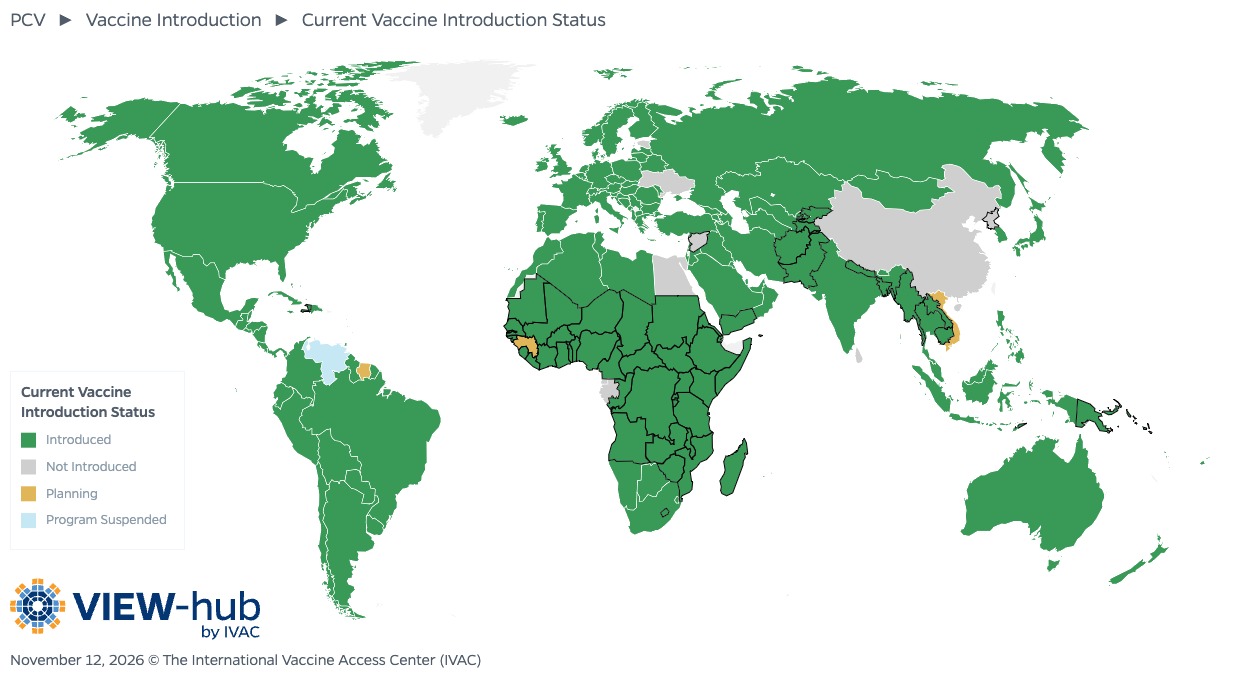
Gavi-eligible countries can leverage support for PCV through the guaranteed Gavi 6.0 funding envelope, helping facilitate new introductions in countries not yet using PCV in their national immunization programs and encouraging others to scale up their programs to reach all children. Drawing on new WHO guidance, Gavi is also encouraging countries that meet the necessary criteria to consider PCV product, formulation, and schedule optimization with the goal of sustaining health impact and long-term program viability.
Extended valency PCVs
Epidemiological evidence continues to confirm that using PCV10 or PCV13 will reduce the incidence of childhood pneumococcal pneumonia, and more than 80% of countries that have introduced PCV use a 10- and/or 13-valent vaccine (34 and 121 countries, respectively). Newly licensed extended-valency PCVs — including PCV14, PCV15, and PCV20 — are beginning to roll out in national immunization programs. These extended-valency vaccines contain additional serotypes of pneumococcus not included in PCV10 and PCV13 vaccines used in most country programs and the WHO recently updated its PCV position paper to include guidance on extended-valency PCVs. Per this guidance, countries should consider extended-valency PCVs if they offer a better match to the range of serotypes causing disease in their specific country context. There may be trade-offs to using extended-valency PCVs, including the potential for higher vaccine prices and partial loss of protection against serotypes included in PCV10 or PCV13. As of November 2026, there are at least 32 countries using extended-valency PCVs in their national immunization programs.
Alternative schedules
The September 2025 WHO position paper also outlines potential alternative schedules to reduce costs and programmatic complexity in countries with mature PCV programs and/or well-established population immunity. For those meeting the criteria for well-established population immunity among children under 5 years, countries may consider switching to a 1p+1 schedule as an off-label alternative to a 3-dose schedule as a means to reduce the cost of their PCV program or reduce the number of injections in their infant immunization schedule. Not all countries are eligible to implement a 1p+1 schedule. Countries must meet both of the following criteria: (1) having well-established population immunity among children under 5 years, and (2) evidence of capacity to administer vaccination between the ages of 9 and 18 months with average coverage of 80% or greater during the five previous years. To date, just one country — the United Kingdom — has implemented the 1p+1 schedule.
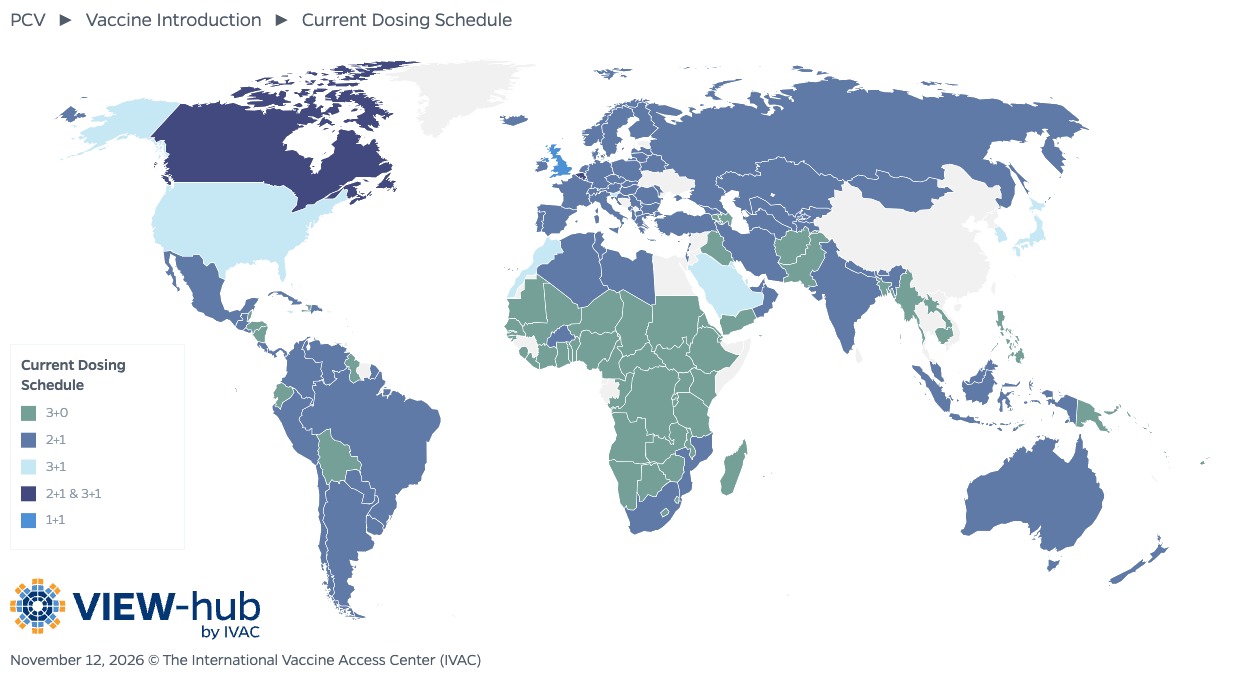
Many countries fit the criteria of sufficient PCV program coverage or other indicators of program maturity to begin considering a switch to a 1p+1 schedule, should they want to reduce the cost of their PCV program or the number of injections in their immunization schedule. There are 47 low- and middle-income countries (LMICs), including 25 Gavi-eligible LMICs, with average PCV3 coverage of at least 80% over the past five years who may fit the minimum coverage criteria to be eligible for switching to a 1p+1 schedule [1].
The WHO position paper also describes the option for countries with well-established population immunity among children under 5 years to consider off-label use of ≥40% fractional doses of PCV13 with a 3-dose schedule. Administering fractional doses would enable countries to stretch their vaccine supply further: a vaccine vial with four full doses could provide up to ten fractional doses.
Countries considering alternative PCV products, formulations, or schedules must consider the trade-offs between cost savings with potential reduction of pneumococcal disease control and the increased need for surveillance. For countries not meeting the necessary criteria, other optimization options may include switching to a lower price PCV or switching between 3-dose schedules (2p+1 and 3p+0) to better align with other vaccine schedules.
New opportunities for RSV prevention
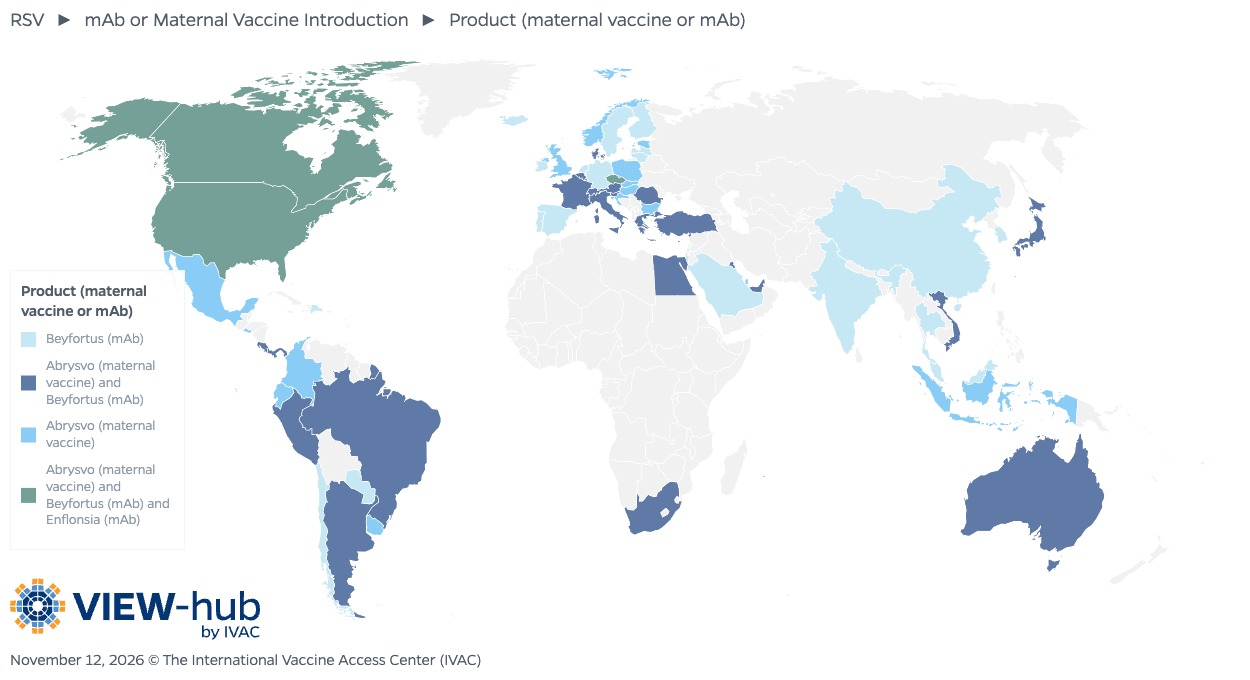
RSV is a leading cause of pneumonia in infants and young children, and incorporating maternal RSV vaccination and/or long-acting monoclonal antibodies (mAbs) targeting RSV into pneumonia control strategies could significantly reduce global disease burden. Maternal RSV vaccination provides passive immunization to infants through maternally acquired antibodies and has been available since 2023, and several mAbs have been licensed for use in infants in recent years.
As of November 2026, 18 countries have introduced the maternal RSV vaccine into their national immunization programs, 21 countries have introduced mAbs, and 28 countries have introduced both maternal vaccination and infant mAbs.
Both maternal vaccination and mAbs been found to be highly effective at protecting infants from severe disease, especially during the first three months of life. Analyses in Spain and Argentina demonstrated that RSV prevention products prevented RSV-associated hospitalizations, and modelled estimates project that maternal vaccination alone could avert more than 2 million RSV-related hospitalizations and more than 126,000 deaths among infants under 6 months across 131 LMICs over 10 years. Several studies are underway to explore RSV vaccination in LMIC contexts, but more real-world data is essential to help justify and shape introduction of these products.
To date, only 9 LMICs (all upper-middle-income countries) have introduced one or more RSV prevention product into their national program. This has been in part driven by the relatively high cost of these products. Earlier this year, WHO prequalified the multi-dose vial presentation of maternal RSV vaccine Abrysvo, which will hopefully make the maternal vaccine more accessible and suitable for Gavi-eligible countries and other LMIC settings.
Effective pneumonia prevention and control requires a multi-pronged approach to address the range of causal pathogens. Maternal RSV vaccine protects against a leading cause of pneumonia for up to six months after birth and using this tool alongside infant PCV vaccination offers an important, comprehensive strategy — providing broader disease coverage when infants are most vulnerable and amplifying the impact of immunization. In some countries, there may be opportunities to leverage cost savings from switching to an alternative PCV product or schedule (i.e., 1p+1) to help support the launch or scale-up of RSV prevention products, like maternal vaccination.
Enhancing pertussis and Hib prevention with hexavalent vaccines
Hib and pertussis are important bacterial causes of LRTI, and the hexavalent vaccine— a six-in-one vaccine that protects children against diphtheria, tetanus, pertussis, hepatitis B, Hib, and polio — represents another opportunity to help protect children from this serious syndrome. As of November 2026, 75 countries are using hexavalent vaccines in their national immunization program, including 31 LMICs.
Pertussis vaccine components
While hexavalent vaccines containing acellular pertussis (aP) have been implemented in high-income countries like Australia and the United Kingdom for decades, in 2024, the WHO prequalified Hexasiil, a new hexavalent vaccine manufactured by the Serum Institute of India which includes a whole-cell pertussis (wP) component. Many countries previously relied on wP-containing pentavalent vaccines, in part because wP triggers more durable immune responses. Following Hexasiil’s prequalification and its inclusion in the latest Gavi funding guidelines, countries now have increased opportunity to switch to these six-in-one vaccines.
As of November 2026, just 10 countries are using wP hexavalent vaccines.
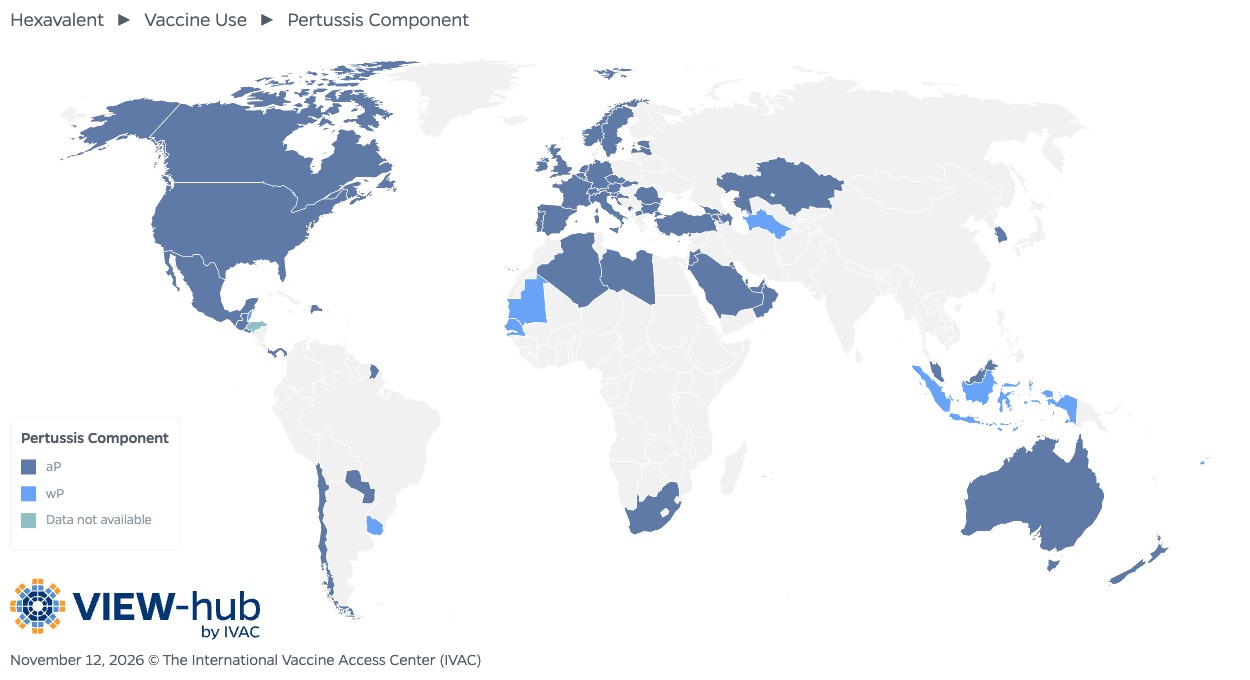
In October 2026, the WHO Strategic Advisory Group of Experts recommended countries to leverage the availability of and Gavi support for the wP hexavalent vaccine to support their shift to a 3-dose inactivated polio vaccine (IPV) schedule. As more countries are expected to introduce hexavalent vaccines into their immunization programs in the coming years, more children can be reached with fewer resources to protect against multiple diseases, including pneumonia.
A comprehensive approach to pneumonia prevention and control
Effectively reducing morbidity, mortality, and the broader impacts of pneumonia hinges on availability of comprehensive package of interventions — pairing prevention tools like vaccines with a range of other protective and treatment strategies — and high uptake of these services.
Medical oxygen is an essential treatment for a wide range of acute and chronic conditions and is particularly important in treating pneumonia and other respiratory illnesses. In people with pneumonia who are also hypoxemic, having low levels of oxygen saturation in their blood, oxygen is a life-saving treatment—hypoxemia in children is a major predictor of mortality [2]. There is a strong global need for medical oxygen, and yet, global access to medical oxygen is highly inequitable. More than five billion people, accounting for more than 60% of the world’s population, do not have access to safe, quality, and affordable medical oxygen services [3]. This burden is highest in LMICs — where 70% of people who need oxygen do not receive it — as well as in rural and remote communities, and in low-income households. Oxygen is also a highly cost-effective intervention. The median cost per disability-adjusted life year averted of providing oxygen therapy for children with pneumonia is on par with the cost-effectiveness of routine childhood immunization programs.
There are now more options to prevent and control pneumonia than ever before, but progress in implementing these measures and improving pneumonia-related outcomes has slowed, particularly in LMICs. Coverage for PCVs and other pneumonia-related vaccines varies significantly both between and within countries. For example, while global WUENIC estimated coverage of a second or third dose of PCV was 71% in 2025, some LMICs reported far lower coverage (16-45%). Certain regions reported higher coverage than others: in 2025, the South-East Asian and European WHO regions had 92% and 83% coverage respectively compared to 61% in the Eastern Mediterranean region or 34% in the Western Pacific region. Coverage improvements have also slowed in recent years: while global coverage of a second or third dose of PCV increased 11% from 2022 to 2025, the European region saw just a 1% increase in coverage in that time despite three introductions. And even as coverage grows, albeit at a slowing pace, a 2022 review noted that more than 13 million infants still do not receive any vaccines each year [4]. Access to newer interventions, like maternal RSV vaccines and mAbs, as well as oxygen and other pneumonia interventions remains inequitable, with low- and middle-income countries continuing to lag behind higher income settings.
With the exciting gains in vaccination, oxygen, and other interventions, this marks a new era in pneumonia prevention and control — hailing the potential for significant gains in reducing morbidity and mortality across the lifecourse. But to fully benefit from this progress, countries must continue to work towards universal access — accelerating their launch in areas where they are not yet available, evaluating existing programs to optimize delivery and design, and strengthening strategies to promote high coverage to protect more children from pneumonia.
Additional resources
RSV Disease Burden Studies [VIEW-hub]
WHO Strategic Advisory Group of Experts on Immunization Meeting – October 2026 [WHO]
World Pneumonia Day [Every Breath Counts]
Better Together: Smarter PCV spending, more protection against RSV [Every Breath Counts]
References
- Secure PCV. What’s new in pneumococcal disease control? Secure PCV. Accessed November 5, 2026. https://stoppneumonia.org/wp-content/uploads/2026/04/Report-SECURE-PCV-Whats-New-in-Pneumococcal-Disease-Control-1.pdf
- Graham H, Bakare AA, Fashanu C, Wiwa O, Duke T, et al. Oxygen therapy for children: A key tool in reducing deaths from pneumonia. Pediatr Pulmonol. 2020;55:S61-S64. doi:10.1002/ppul.24656
- Graham HR, King C, Rahman AE, Kitutu FE, Greenslade L, et al. Reducing global inequities in medical oxygen access: the Lancet Global Health Commission on medical oxygen security. Lancet Glob Health. 2025;13(3):e528-e584. doi:10.1016/S2214-109X(24)00496-0
- Quach A, Spence H, Nguyen C, Graham SM, von Mollendorf C, et al. Slow progress towards pneumonia control for children in low-and-middle income countries as measured by pneumonia indicators: A systematic review of the literature. J Glob Health. 2022;12:10006. doi:10.7189/jogh.12.10006